

Mary’s circle
Mary Shelley was part of a highly intellectual and accomplished circle of people. Her parents were famous philosophers and novelists, her husband and friends leading poets of the age, and her hosts in Scotland part of a major dynasty.

Mary Wollstonecraft (1759–1797) was a pioneering 18th-century writer, philosopher, and advocate for women's rights who remains best known for her landmark feminist manifesto A Vindication of the Rights of Woman. She was the mother of Mary Shelley. Sadly, she died a little over a week after her daughter was born. Growing up and well into adulthood, Shelley was an avid reader of Wollstonecraft’s works.
Mary Wollstonecraft
(Mary’s mother)
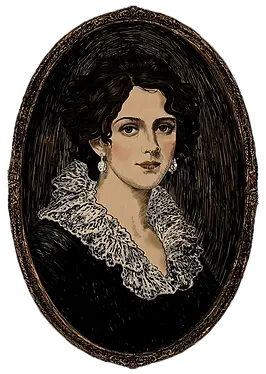
The daughter of William Thomas Baxter, Isabella (or Isabel) Baxter (1795–1863) was roughly Mary Shelley’s age. Isabella and Mary grew exceptionally close, roaming the surrounding woodlands and sharing a love for Gothic storytelling. In 1814, Isabella married David Booth, a radical author and scholar who was around thirty years older than her. He prohibited Isabella from corresponding with Mary.
Isabella Baxter
(childhood friend)
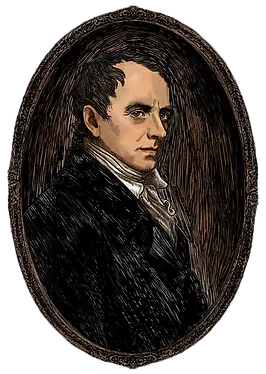
Mary Shelley’s father, William Godwin (1756–1836), was an English journalist, novelist, and political philosopher. Godwin’s radical philosophies deeply influenced both Mary Shelley and her future husband, the poet Percy Bysshe Shelley. Mary dedicated her masterpiece, Frankenstein, to her father. But their relationship had been, and remained, complicated. Godwin largely supported his daughter’s career, but he suppressed her most controversial work, Mathilda, which would remain unpublished until 1959.
William Godwin
(Mary’s father)

Celebrated for his lyrical genius and radical political and philosophical beliefs, Percy Bysshe Shelley (1792–1822) was one of the major English Romantic poets. A keen supporter of his wife’s career, Shelley was the driving force behind the publication of Frankenstein. He drowned in Italy at the age of 29, leaving behind his widow and only surviving son, Percy Florence Shelley.
Percy Bysshe Shelley
(husband)

A close friend of Mary Shelley’s father, William Godwin, William Thomas Baxter (1771-1842) was a wealthy sailcloth merchant in Dundee, and an avid supporter of the French Revolution and radical politics. At Godwin’s behest, Mary lived with the Baxters off and on between 1812 and 1814.
William Thomas Baxter
(family friend)

Partly raised in Aberdeen, Lord Byron (George Gordon Byron, 1788–1824) was one of the most celebrated poets of the 19th century. Hounded by scandal, he cultivated a brooding persona to match his highly accomplished, semi-autobiographical verse. Along with Percy Bysshe Shelley, Mary Shelley and Claire Clairmont, he participated in the most famous ghost story competition in history during a residency in his home in Switzerland. That friendly contest gave birth to Frankenstein and John Polidori’s The Vampyre, whose title character was modelled on Byron.
Lord Byron
(friend)

Claire Clairmont (1798–1879) was Mary Shelley’s stepsister, and they appeared to be very close. She accompanied the Shelleys on their elopement to Europe in 1814, during which time she wrote stories and other works with them. After a brief affair with Lord Byron, she fell pregnant with a daughter named Allegra.
Claire Clairmont
(stepsister)

Mary Ann Baxter (1801–1884) was a prominent 19th-century philanthropist in Dundee. She co-founded University College, Dundee (the forerunner to the modern University of Dundee). Mary Ann was the sister of Sir David Baxter and a sister-in-law/cousin to the Baxters with whom Shelley lived. The founding mission statement of the university would have appealed to Mary Shelley: “promoting the education of persons of both sexes and the study of science, literature, and the fine arts”.